

Printing solutions and special finishes for publishing
The choice of inks and printing techniques plays a key role in defining factors such as readability, colour reproduction and the tactile perception of a book. For this reason, each process is selected according to the content and intended use of the publication
At Errestampa, every stage is managed to achieve the highest possible quality in the final printed product, starting with a rigorous quality control process that accompanies every phase of production. The goal is to enhance each publishing project, where both visual and tactile elements contribute to the overall reading experience.
Standard offset inks

Standard offset inks are the foundation of traditional book printing. They ensure colour consistency and excellent adaptability across a wide range of paper stocks.
Commonly used for illustrated books, catalogues, fiction and commercial publications, they provide a balanced combination of image definition and detail reproduction.
High-density inks
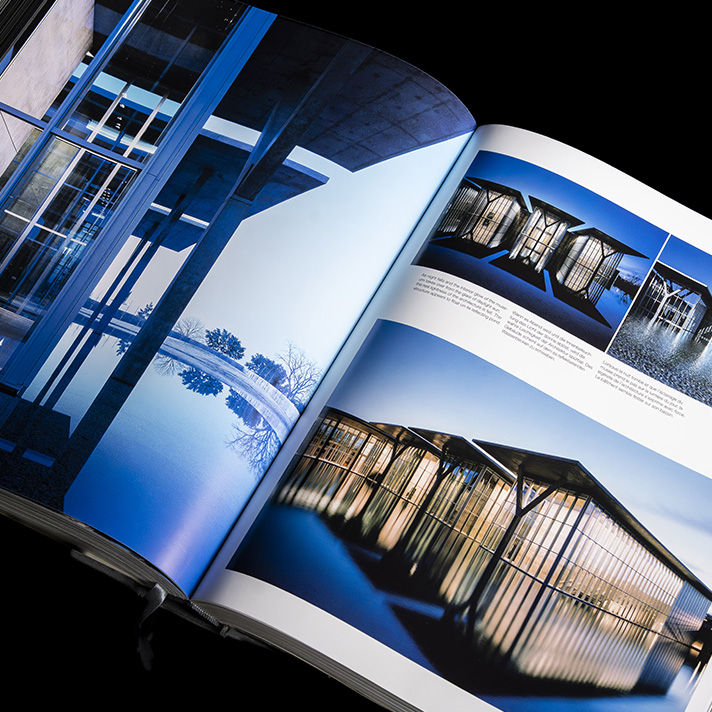
High-density inks make it possible to achieve deeper blacks, richer colours and stronger contrasts, qualities that are particularly valued in photographic publications and art books.
Drip-off
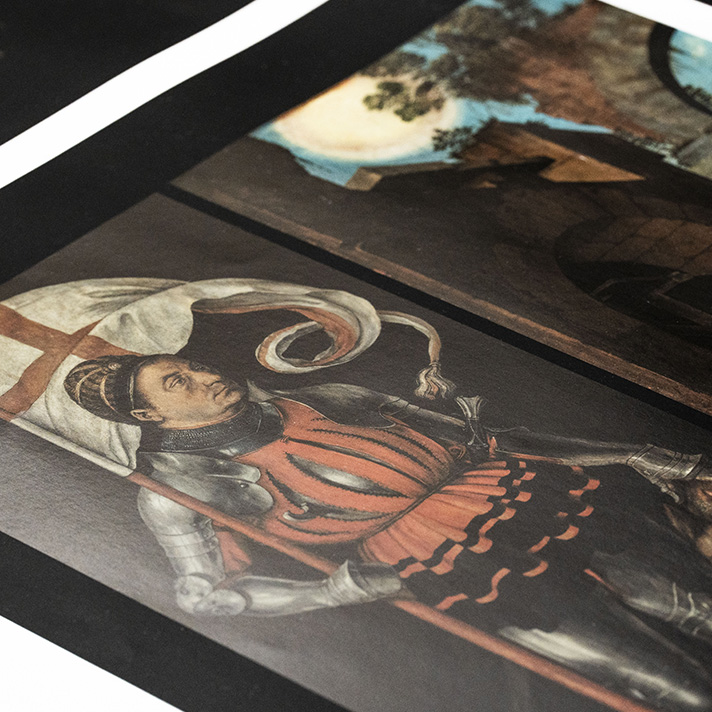
The drip-off technique combines gloss and matt varnishes on the same surface, creating visual and tactile contrasts that can be appreciated through both light reflection and touch.
Duotone and tritone printing
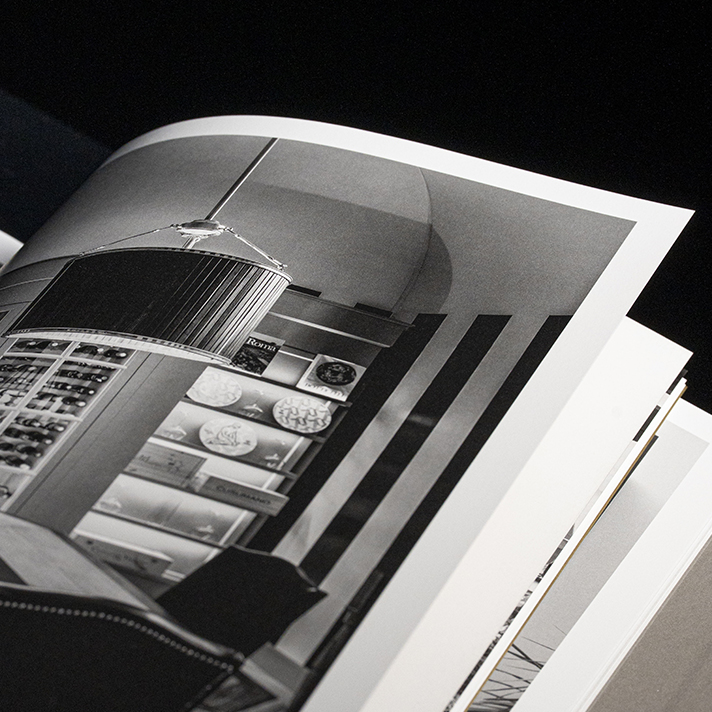
Duotone and tritone printing use a limited number of colours to build images.
This approach is often chosen for photographic publishing projects, where one or two Pantone colours are combined with black to add depth and character to black-and-white photography.
Stochastic screening
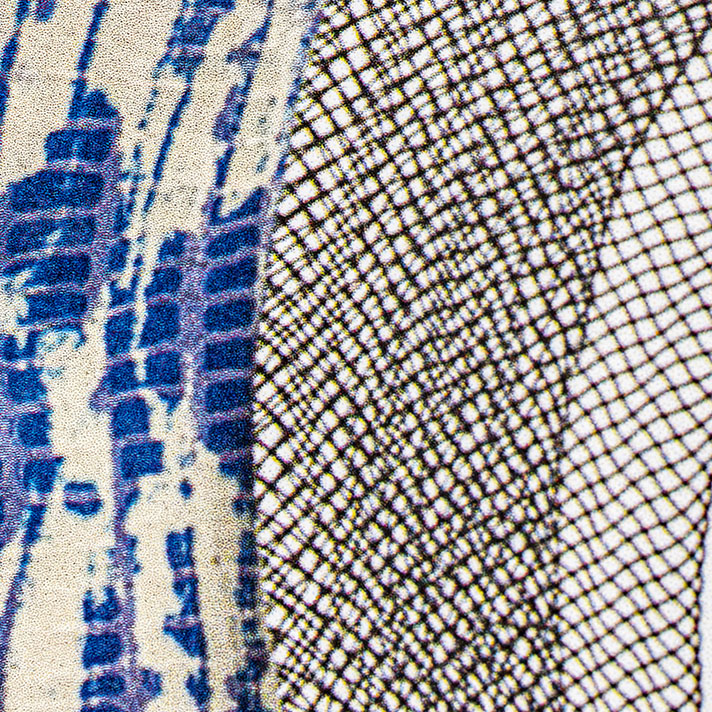
Stochastic screening uses uniformly sized dots distributed in a random pattern, improving image definition and the smoothness of tonal transitions.
This technology reduces the visibility of the screen pattern and delivers highly accurate reproduction of photographic details and high-resolution images.
Foil stamping
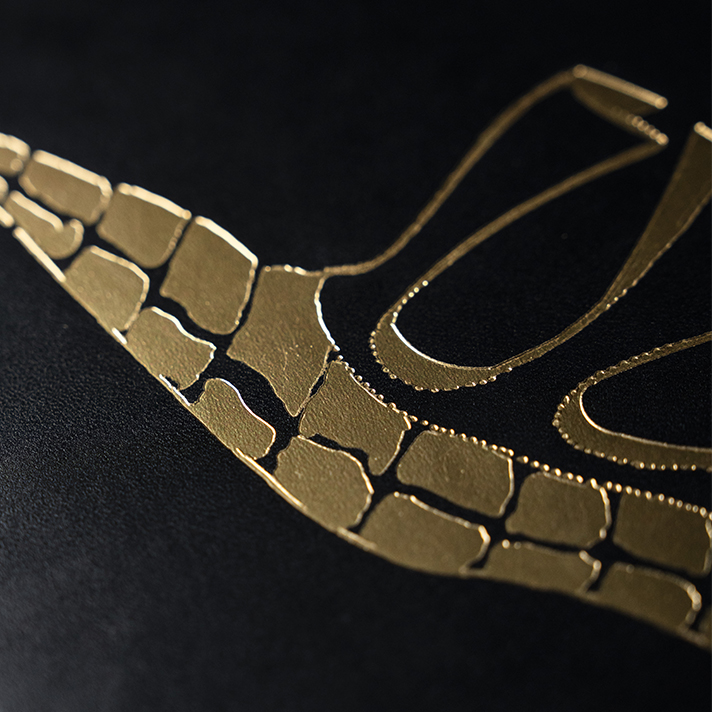
Foil applications introduce metallic or pigmented effects through a hot stamping process on paper and other substrates.
Gold foils and specialty finishes are often used to highlight titles, graphic details and textured elements. This technique is particularly suited to premium editions and publishing projects where materiality plays a central role.
Foil, spray and digital printing
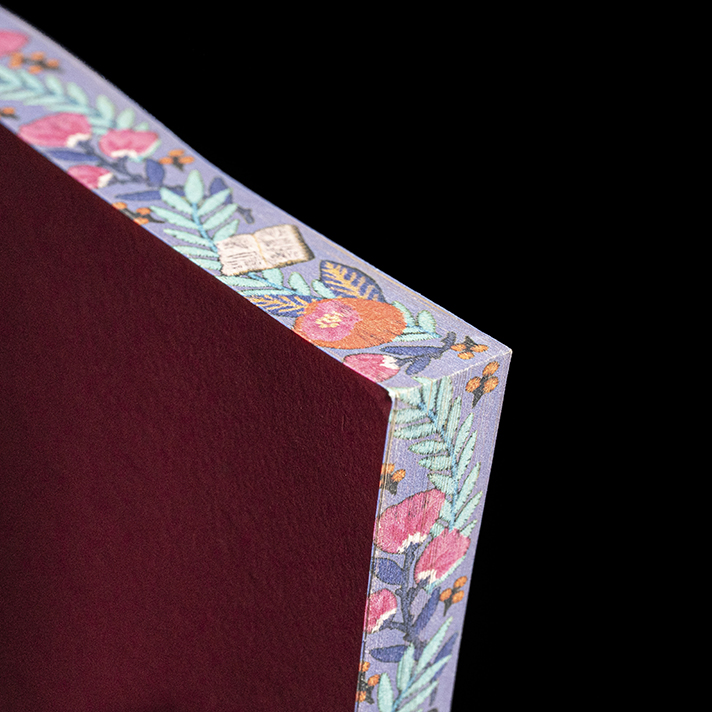
Edge colouring enhances the outer edges of a book block through metallic foil, sprayed pigments or digital printing.
Beyond its decorative function, this process strengthens the visual identity of an edition and makes a book instantly recognisable even when closed. It is frequently used for illustrated fiction, special editions and collectible series.
Printing on canvas and silk
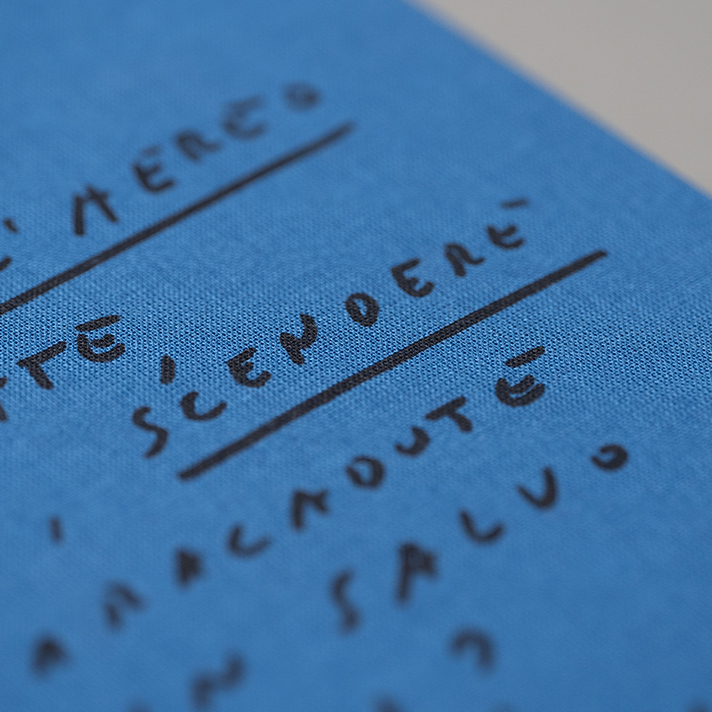
Printing on canvas and silk allows graphic and photographic content to be reproduced on textile materials used for coverings or decorative elements.
The distinctive material qualities of these substrates influence depth and colour perception, making them particularly suitable for artistic editions and visually driven publishing projects.
